Showing posts with label childhood. Show all posts

Monday, 1 April 2013

Writing For Il Duce

I have been teaching some classes in Writing For Children recently and one of the things I keep noticing is how many people bring a great deal of sentimentality about children along to the class. It’s one of the first things I try to get them to jettison.

Sentimentality is a very natural emotional response. I’m a sentimental man myself. For weeks after my younger daughter went off to university and the house was left empty by day except for me and my computer, I was to be found wandering from room to room, picking up random objects that belonged to her and staring at them with tear-filled eyes as though I had just received a telegram from the front line to say that she was missing in action.

And these days I am a figure of fun in the family for the way my grandchildren have me twisted around their little fingers. When he can’t get his own way, the older one performs a fake crying act that everyone else just laughs at but that somehow wins me over, even though I know perfectly well it’s phoney.

But my sentimentality is of absolutely no use to me as a writer because children’s literature is about the child’s experience; and that means not looking at your child characters but seeing the world through their eyes.

Children are not sentimental. What they are most concerned with is power. Entirely understandably, because they have none. They don’t wake up and think, ‘I wonder what I should do today.’ They get told they’re going to nursery or they’re being taken to the supermarket or (if they’re lucky) they’re going to the park. That’s why they spend so much time trying to subvert the adult agenda. If they’re being difficult it’s nearly always an attempt to wrest some sort of control from the grown-ups.

The stark truth is that however much you love them, there’s a little bit of Mussolini inside every child. So forget the sentimentality. You are writing for Il Duce. Just make sure it's good.

Monday, 11 March 2013

Whispering To A Boy Who Imagines He Is Clever

Once upon a time, if I were at a party, someone might say, ‘So what do you do for a living?’ and I would say, ‘I’m a writer.’ They would look very interested and say, ‘Really? What sort of thing do you write?’ to which I would reply. ‘Children’s books.’ Whereupon they would immediately look disappointed and change the subject.

This reaction changed completely after the success of J K Rowling. Nowadays everyone always wants to know everything about the business and, above all, how they can get published. I am constantly coming into contact with people who are consumed by the desire to be a successful children’s writer.

What surprises me is how few of these people have actually read any children’s books since their own childhood. I’ve taught courses on writing for children only to find that ninety per cent of the students, who have usually paid substantial fees to be there, have scarcely read anything except the first Harry Potter title and one or two of the Narnia series. So what is going on here?

It seems to me that people are seduced by the glamour that has somehow attached itself to children’s writing. This is laughable since if you were to be a fly on the wall at a meeting of children’s writers you would witness a singularly unglamorous bunch of people. For the most part we aren’t young or sexy or well-dressed. We are people with holes in our sweaters, people in need of a decent haircut.

So where does this illusion of glamour come from? I think it arises from two sources: firstly, there is the glitter of wealth; secondly there is the mystery of creative fulfilment.

The notion that writing children’s books might be a way to get rich quick is, as anyone who knows anything about publishing will tell you, entirely ridiculous. The truth is that only a very small proportion of children’s writers even make a living out of their work.

The promise of creative fulfilment is a more substantial attraction and it’s undeniable that fulfilment is to be found in practising any art from. But you have to ask yourself this question: why children’s books? If you’re not already reading them then possibly that’s an indication you’re not really interested in this field - and you won’t get fulfilment from trying to succeed at something that doesn’t interest you.

I am a children’s writer because childhood is the place where I reside most naturally. I watch as the youngest of my grandchildren begins to learn to crawl. I see her rocking back and forth on her hands and knees, practising the movements that will soon allow her to move across the room and I find myself propelled back into my own childhood, recalling the way the paving stones rolled away before me as I sat in the push-chair.

Or I do some drawing with my older grandchildren and out of the corner of my eye I see the tall, shadowy figure of a nun standing over me, regarding my clumsy efforts with disdain. I know what she thinks of me. She thinks that I am a boy and, a such, an entirely undesirable object. Worse than that, I am a vain, talkative boy who imagines he is clever and does not listen to what he is told. This understanding renders the drawing that had pleased me so much a moment ago, nothing but a worthless scribble.

I want to reassure that boy. I want to tell him that one day this woman’s disdain will not matter so much; but even as I stand beside him and whisper, I know that he cannot hear me.

For me, therefore, writing is not primarily about money or about creative fulfilment. It is a story being told to a child who no longer exists.

Friday, 30 November 2012

Happy Endings

When I was at school my favourite activity was writing stories but we were often given very uninspiring titles to work with. One that has stuck in my mind, down through the years is An Unfortunate Accident Is Narrowly Averted. It made me groan at the time but thinking about it now, I have to admit that it does sum up the plot of an awful lot of novels.

At least it suggested a happy ending. I've always preferred writing stories that end without blood on the carpet and with all the cast still intact. The trouble is, stories often refuse to turn out this way because the characters insist on making up their own minds about what they do. No matter how you struggle to keep them from harm, they simply will not cooperate.

This is as true in life as it is in books. I have some really good friends who seem to spend enormous amounts of energy sabotaging their own contentment. One or two of them even realise they do it; they just can't seem to help themselves.

My grandson has recently begun fictionalising his world. He will look up brightly and say, 'Let's go to the park, said Mummy' or 'Let's go to the café and have some hot chocolate, said Daddy'. It's not just his mother and father who feature in these optimistic little vignettes. His four month old sister might suggest that they go to the library or his Grandpa (me) might suddenly suggest that he has a biscuit. There is absolutely no limit to the happy endings of these micro narratives.

More than anything else my wish for him, and for my other grandchildren, is that this is the way it stays, that he will always be the hero of stories that end happily – even if it can't be hot chocolate and biscuits all the way through.

Thursday, 26 July 2012

No More Choo Choo Trains

One of my students isn't very keen on dialogue. She writes beautiful vignettes composed of crystalline imagery and carefully observed detail. But absolutely no dialogue. Since it's obvious that she already knows how to do this trick and since she's come to Cambridge to learn something new, I set her a writing assignment with the instruction to include a decent chunk of dialogue.

She comes to our next session with another beautifully turned vignette. 'Hmm,' I say, after we have read it aloud. 'Tell me, what do you like about this piece of writing?' She picks out a piece of carefully observed detail. 'Yes, I can see how pleasing that is,' I agree. 'And what do you think is missing?' She's not sure. 'What about dialogue?' She points to a few lines of dialogue. 'Let's look at these, shall we?' I write them up on the board. Then I remove all the he saids and she saids. 'Okay, now what is it?' I ask.

It's a poem.

That's how the week starts. It ends with me looking after my grandchildren who are one and two years old. One of our regular outings is to the railway station to watch the trains which they are both very enthusiastic about. Each time a train arrives in the station, or rushes through without stopping, the older of the two turns to me and demands, 'More choo choo trains!'

'There will be more choo choo trains,' I tell him. And for the present he is satisfied. But at last there comes a time when I have had enough of standing there watching my grandchildren watching the trains. 'Time to go home,' I announce. Faces fall. Enthusiasm turns sour. But we cannot stay there forever.

The truth is that there is always a time when you must say bye bye to the choo choo trains even if they are beautifully composed with carefully observed detail and crystalline imagery.

Wednesday, 27 June 2012

Behind The Railings - what it takes to get published

I am watching a very good friend of mine trying to become a professional writer. She has a two year old child, a part-time job and she is pregnant. Demands upon her time and energy are never-ending. She wakes up feeling tired. And yet she struggles on with her novel.

I am reminded of an event I witnessed thirty years ago in the days before mobile phones. At that time I was working in Central London and used to cycle home in the evenings past Battersea Park, a large open space south of the river.

It was autumn and the evenings were beginning to draw in. The road beside the park was like a motorway, the traffic heavy and no sign of any pedestrians. I switched on my bicycle lamp and pedalled determinedly, trying to think of something other than how much of my journey still lay ahead.

Then I saw the woman. She was standing inside the park clutching the railings with one hand and holding a baby in the other. There was something about her face that drew my attention as I flashed past. Had I been mistaken or had she mouthed something at me? I carried on cycling for a few minutes as my brain tried to decode what I had just seen. Suddenly I realised that she had been saying, 'Help me!'

I stopped my bicycle, turned round and wheeled it back towards the woman. As I got closer it was clear from her expression that she was utterly desperate. 'Are you all right?' I asked

'No,' she said. 'The park gates are locked and I can't get out.' She was almost sobbing. 'If I didn't have the baby, I could climb out but I can't leave him. Will you take him?'

She handed the child over the railings to me and a few minutes later she had clambered over herself. I gave her back the baby. 'How long have you been stuck there?' I asked.

'Three quarters of an hour,' she said. Then her self-control broke and she began openly weeping.

'Do you want me to walk home with you?' I asked but she shook her head.

'I'll be all right now,' she said, embarrassed by her tears. 'I don't live far away. I just couldn't do anything because of the baby and he was getting so cold.' She walked away without another word. I got back on my bicycle and carried on with my journey.

Whenever I see my friend struggling to find a way of finishing her novel while looking after her toddler and working three days a week at the same time, I remember the woman in the park. Like her, my friend needs the traffic to stop. She needs an agent or an editor to take an interest. And all the time that she waits, desperately hoping for a miracle, she struggles bravely to maintain her self-control and to keep her dignity.

Tuesday, 12 June 2012

In The Swim Of Things

My wife loves me. Indeed, as one of my less charitable friends observed, 'she must do to put up with you'. Nevertheless she does not jump up and down on the spot, flapping her arms about as though she were trying to fly, at the mere sight of me. And let's be honest, it would be distinctly worrying if she did. But my grandson does.

You can't beat that for appreciation. It's the sort of thing that makes looking after him and his younger cousin two days a week so immensely rewarding. But it's also immensely tiring. And until recently I was working at Goldsmiths College two days a week and trying to finish off a novel at the same time. So I was stretched. The end of that novel tantalised me like a mirage in the desert.

But I'm happy to say that I've finished it, edited it and sent it off to my publisher. Consequently, I am no longer going around thinking about it night and day. I am a free man and I couldn't be happier. In fact, I feel like jumping up and down on the spot and flapping my arms about. I'm not going to, of course, because at my age you have to try to preserve some small modicum of dignity.

The other day I took my grandchildren to a local aquarium. The younger one, who is just over one year old, was not particularly impressed. To him, I suspect, everything is bizarre, fish no more so than anything else. He wandered from tank to tank giving each one a cursory examination until he discovered a chrome rubbish bin that absolutely fascinated him. But the older one, who is just over two, was beside himself with excitement. In fact, he did that jumping up and down thing all over again.

Which rather put paid to my fantasy about being the best grandfather in the universe. The truth is that I am as good as a load of fish. But I suppose that's not too bad, when you come to think about it. As good as a load of fish who have just finished a novel. Glug glug!

Thursday, 22 March 2012

Are You Talking To Me?

A large part of my time at the moment is taken up with other people's language. For two days a week I look after my grandson who is learning to talk and on a further two days I sit in a room in a college in London and students come to see me to discuss problems with their writing. What surprises me is how similar these experiences sometimes are.

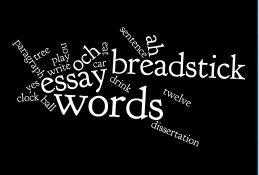
The other day, for example, a young woman came along with an essay that had been failed by her tutor - unsurprisingly, since it seemed to have been written in accordance with an alternative set of grammar rules from that commonly in use by the rest of us. 'Let's just take a look at these first three sentences,' I suggested. 'It seems to me that they're really all one sentence.'

The young woman frowned and shook her head. 'No, they couldn't be,' she said firmly. 'Why not?' I asked. 'Well a sentence has to be twelve words long, doesn't it?' she said, as if this was a truth that even a babe in arms was well aware of. 'Um, no,' I said.

She gave me the sort of look you normally reserve for someone who tells you that the second hand car you are considering buying was owned by one old lady who only ever used it to drive to evensong.

Well that was what she had read on the internet, the young woman insisted, and she had struggled for hours to get every sentence the same. 'It was really hard,' she added. 'And now you're telling me I've got to do it all over again!'

At least my grandson doesn't get his rules from the internet. Instead, he makes them up himself, along with some of his vocabulary. Bread-sticks, for example, are soozies. Goodness knows why. Yes used to be Ah. Now it's Och, as though he had spent some time in Scotland.

Recently his mother told me about a new expression which seems to mean, Who's that? 'I don't know where he got it from,' she protested, 'but whenever there's a knock on the door he looks up, frowns and says something that sounds exactly like arsehole.'

And indeed just last week my grandson was having his midday nap in the spare bedroom upstairs and I was sitting on the edge of the bed reading when he woke and sat up. At the same time the tree-surgeon who was working in our garden came in by the back door and walked through the hallway downstairs.

My grandson's eyes widened and he looked at me. 'Arsehole,' he said.

Funnily enough that may be exactly what the poor young woman who had to rewrite her essay was thinking.

Tuesday, 21 February 2012

The Shape-Sorting Box

My grandson has a shape sorting toy. I'm sure you've seen one. It's a brightly coloured plastic box with a series of differently shaped holes: a square hole, a circular hole, a triangular hole and so on. There are also a number of matching plastic shapes and the point of the toy is for the child to push each shape through the correct hole and into the box.

When my grandson feels like it he can correctly sort some (though not all) of the shapes. But only when he feels like it. On other occasions he will determinedly try to push the triangular shape through the square hole or the square shape through the circular hole.

It's no good pointing out to him that it's the wrong shape for the hole. He knows that. He just wants to make it into the correct one by sheer determination. He wants to bend the toy to his will. It usually ends up with him shouting out loud and throwing it away in disgust.

When I'm not looking after my grandson or writing children's books, I'm the Writing Fellow at Goldsmiths College, London. I sit in my office and people come to see me to talk about the problems they experience with their writing.

Today I saw a young woman who felt she ought to be getting better grades. It was clear just from talking to her that she was intelligent. So I asked her to show me one of her essays. I only had to read the first page to see what she was doing wrong. She was approaching the task as if she were writing a historical novel. I think you should try tackling this more systematically, I suggested. You need a clear introduction in which you state what your argument is going to be, then a series of paragraphs, each dealing with a specific aspect of the topic under discussion, and each following its predecessor in an orderly sequence, like a set of steps leading the reader neatly to your conclusion.

Actually she knew this perfectly well. In fact, she agreed wholeheartedly with me. That was exactly what she ought to do. So why was she writing like this instead? Because she wanted to do something more individual, something more creative.

But it's not really creativity that's required here, I pointed out. At least not the kind of creativity you might apply to writing a novel. The point of an academic essay is to demonstrate you've understood the topic. You show you've read what the authorities on the subject have to say, and considered how their arguments apply to this case. That way your tutor knows you're making progress.

She knew that too but it just seemed so boring. So very disappointing. Her eyes misted up. She had hoped university would be more interesting. I felt immensely sorry for her, trying so hard to push herself through a university-shaped hole. I can still remember what that felt like even though it's a very long time since I was at college.

After she'd left it occurred to me that next time my grandson throws the shape sorting box across the kitchen , I must try to remember what's really going on in his head. He's not just having a tantrum. It's more complicated. I'm asking him for an essay but he wants to write a novel. No wonder he gets frustrated!

Wednesday, 18 January 2012

The Undiscovered World

Over the holiday my grandson and I were playing with a balloon left over from a Christmas party. At a certain point in the game I repeated aloud some lines from one of his favourite books.

To tell the truth, it's a book I really hate reading for a number of reasons. It's written in such sparse language that it feels as though you're scanning a shopping list rather than taking part in a narrative; the illustrations are unsophisticated and remind me of the kind of graphics you encounter in a low-end computer game; and the plot ends up with the hero realising that it had all been a dream - the kind of ending I used to give the stories I wrote in primary school.

But my grandson loves it so I'm obliged to suspend my aesthetic judgement and read it to him over and over again. He's been known to demand this book twelve times in immediate succession, by the end of which I'm practically screaming through my forced jollity.

On this particular occasion as I kicked the balloon towards the front door I quoted gleefully from the text. 'He shoots,' I cried. 'He scores! He's won the game. He gets the trophy. He holds it high. He wakes up.'

The effect on my grandson was electric. He had been running around, laughing giddily but now he stopped in his tracks, staring at me intently with a look of wonder on his face.

It was clear to me that he was experiencing a minor shift in his world view brought on by the realisation that the words he was so familiar with could have an existence outside the covers of the book in which he normally encountered them. He was, in fact, discovering one of the key features of narrative - its extendibility into real life.

I felt immediately ashamed of my cynicism as I understood that what I had dismissed as a clumsy and amateurish piece of writing was for my grandson an essential tool in his struggle to make sense of the undiscovered world that lay all around him as far as his eyes could see.

Tuesday, 3 January 2012

Bewilderment

Christmas is over for another year. I spent it with my wife, my daughter, her husband and our grandson. He had a great time, but every now and again I caught him looking around with a puzzled expression. He clearly had no idea what it was all about or what was going to happen next.

Today the news is full of a story about a man who shot his wife, her sister and her niece at a New Year drinks party. People in the small town in which the shooting took place are stunned. Police are trying to make sense of the incident.

I remember a Christmas about fifteen years ago, when my mother was alive. We were talking about a friend of hers who used to pop into our house on a Saturday afternoon when I was growing up. She was a bright, lively person, full of laughter and jokes and I always enjoyed it when she made an appearance. But she never stayed for long.

The reason she invariably hurried away, my mother informed me, was her husband, a tall, menacing man who seldom spoke, but whose smouldering eyes were filled with a barely suppressed violence that even as a child I recognised though I could not explain.

'He was terribly jealous,' my mother went on. 'She always told him she was just going to the shops. If she was gone too long and he found out she'd called into our house there would have been terrible trouble.'

'But why?' I asked, naively. 'I mean Dad was out of work. Who was he jealous of?'

'He just wanted to be in control,' my mother said.

My daughter, whose grandchild I now look after two days a week, was fifteen at the time. She had been sitting in a corner half-listening to this conversation. Now she spoke. 'But why did she stay with him?'

'Well,' I said, searching for an explanation that might make sense to her, 'marriage was a different institution in those days.'

'It certainly was,' my mother said. She spoke with feeling.

My daughter shrugged. 'I would have just left him,' she said. It seemed so obvious to her.

I was pleased by her clarity but also a little daunted. The past is such a difficult thing to explain to the present.

On the mantelpiece of my sitting room there is a photo of me standing amid a group of children in somebody's back garden. I am about two years old so it must be 1956. I'm holding a ball and gazing seriously at the camera with an air of faint bewilderment. Since that time the world has changed so much I sometimes think there is nothing the child in that photograph has in common with my grand children growing up today. Nothing except bewilderment.

Friday, 30 December 2011

The Reading Experience


I've been reading a lot of books with my grandson over the Christmas period and I can't help noticing how all the genres we are so familiar with in contemporary literature are already there right from the start of the reading experience.

Take those lift-the-flap books that infants are so fond of, with their titles like 'Where's Maisy?' or 'Who Took The Cookie From The Cookie Jar?'. These are so clearly the primitive ancestors of the crime novels that fill the best-seller lists.

There's the same motivation for the reader - the pleasure of watching a mystery unravel, and the same comforting predictability about the conclusion. The hero will always appear from behind the last flap and smilingly wrap up the story.

There are character driven books where the focus is simply on presenting an individual, or a set of characters, to the reader. In one of my grandson's current favourites called 'Let's Say Hello To The Snowy Animals', the reader is introduced to a set of animals who live in cold climates, each of whom has his or her own particular set of signature traits, and then we say goodbye to them again. End of story.

Then there are issues-based books, like the hugely successful Charlie and Lola stories, which focus on the tricky problems that cast their shadow over those early years, like a child's reluctance to try new foods, or to go to sleep, or share toys with other children.

Perhaps there is no real difference between books for children and books for adults. Perhaps there are just books and readers.

For a writer like me this is all very reassuring. Next time I get a bad review I can remind myself that all those sophisticated readers discussing the latest titles in book clubs or on campuses, on blogs or in magazines, are only grown-up babies after all.

Thursday, 15 December 2011

Missing The Performance

Today I should have been looking after my grandson but both of us are ill. I have (what feels to me) like one of the worst colds in medical history. His mother reports that he just clings to her and feels sorry for himself.

So she's stayed home from work today to look after him and I've sat on my sofa drinking Lemsip. (For those of you not familiar with Lemsip it's a fluorescent yellow cold cure that tastes a bit like low-level radioactive waste.)

I've spent the day watching old movies. Funnily enough my grandson has been doing the same thing. My daughter found a DVD that used to be my grandson's favourite until it got lost. She was really pleased when she unearthed it but she soon regretted her discovery. He's been watching it over and over again for the last half hour, she told me in a slightly desperate email. Whenever I try to interest him in anything else he cries.

It seems to me that there's an awful lot of repetition in childhood, as if it were all an extended rehearsal. The main performance, every child instinctively believes, comes when you're an adult (and they can't wait to get there). We know different, of course. We know that the performance started the moment they were born and parents, far from being the stars, are just carrying around the props or sweeping up the stage.

Grandparenthood, on the other hand, is a bit like being in the audience for this wonderful performance. Unfortunately, today I missed the show and I can't tell you how sorry I am.

Saturday, 3 December 2011

Who's Teaching Who?


When I'm looking after my grandson I like to think that I'm teaching him things as well. We spend time reading books, and looking at flashcards. But we also spend huge amounts of time playing games that are all process and absolutely no product.

For example one of his favourite games at the moment involves me building a tower from wooden blocks that he then knocks down with his tractor to the accompaniment of a shout of 'Crash!' from me and something a bit like 'Agh!' from him. This game can be repeated endlessly until he gets sick of it (and his tolerance level is pretty high right now).

This is the complete opposite of the way I work as a professional children's writer. Whenever the idea for a story pops into my head I immediately start seeing it as a completed novel and asking questions like: What age reader is this story intended for? Will my agent like it? Will my editor like it? How does it fit with the other books I've written? I can't help this. I've been writing children's books for thirty years so perhaps it's inevitable.

However, seeing how my grandson plays has made me remember how I first began writing. Naturally, I wanted to get published in those days but that wasn't why I wrote. I wrote for one simple reason: because I enjoyed it. I explored the writing process rather like my grandson explores the possibilities of wooden bricks and tractors.

I can remember reading a lot of Roald Dahl stories and understanding exactly how he achieved his twist endings. It's so precise it's almost mathematical. And that doesn't mean I'm criticising him, by the way. He's an architect of fiction and like every good architect he plans his work very carefully.

When I realised this I went away and wrote any number of twist stories, just to prove to myself that I could do it and just for the pleasure of seeing how the machinery worked.

Writing is my job. It's work and like all work it has to be taken seriously. But it's also fun. My grandson has reminded me of that. So who's teaching who?

Friday, 25 November 2011

The Sky Is Dark


My grandson has begun to talk. Last week when I took him out to his mother's car in the evening I mentioned that the sky was dark because it was late. This evening, after he had eaten his meal he looked out the window and, pointing outside, said what sounded to me like, 'A scar, a cigar.' Then he looked at me expectantly.

'He's talking about the sky,' his mother said. 'He was doing it in the park the other day. He kept saying the same thing and pointing upwards. It was ages before we realised that he was saying the sky.'

I turned back to my grandson who repeated the same phrase and now I realised that what had sounded like 'a scar' was 'the sky' and what I had translated as a 'a cigar' was really 'is dark'. I nodded my head, eagerly. 'The sky is dark,' I said. 'That's what you're saying, isn't it?'

He was ecstatic. He repeated his little mantra over and over again, pointing towards the window and each time I confirmed what he had just said, he laughed delightedly.

I cannot imagine what an incredible time this must be for him! I remember when I got my first book published. I wanted to replay the news over and over again. But that was nothing compared to my grandson's triumph. He has begun his dialogue with the world. Who knows where it will lead?

Monday, 14 November 2011

Lost In The Forest

Before I begin to write I always have to undergo a minor transformation, a kind of alchemy in which I put aside my everyday persona and take on my writer's persona. It takes a certain amount of time and there are a number of little rituals to go through. Anyone looking at me would think I was just fiddling about, wasting time, putting off the business of getting down to work; but I'm not.

When I first started writing I was working full time as a teacher, then coming home each evening to play with my daughters and to help put them to bed. So there was very little spare time. I used to write for an hour a night and no more. Even so, a proportion of that hour had to be given over to the process of metamorphosis that reminded me who I really was and, in doing so, allowed me to write.

After many years in which I could write every day I am now looking after my grandson two days a week and working in a university two days a week. So time is once again in very short supply. Nevertheless, I can't just sit down and write whenever I find myself with a spare moment. There has to be that ritual separation from my everyday self.

I think that no-one really grows up. We pretend to do so because that's what the world expects. There are jobs to be done, rent and mortgages to pay, meals to be cooked, rooms to be tidied, responsibilities to be faced up to; but inside each of us we carry a bewildered but curious child who doesn't really understand how the world works yet is determined to keep trying until he finds out.

Oddly enough, that's the part of your self you have to get in touch with in order to write because being efficient, organised, competent and capable isn't enough. You face the blank page like a child who is lost in the forest. First you sit down and wail. Then when the wailing is done, you start to crawl.

Thursday, 10 November 2011

Learning To Walk

For the last eight months every Thursday and Friday I've been looking after my grandson, who is now about twenty months old, while his mother works. It's an extremely rewarding but also an extremely exhausting experience.

When you have your own children you are so preoccupied with the struggle for survival that you don't have the same opportunity to savour and reflect on the child's development. You're walking around half asleep, concentrating on getting through the day. But as a grandparent, you have the chance to see a process that you've already lived through once, only this time in much finer detail.

My grandson was a little reluctant to start walking. He needed a certain amount of encouragement to get up off all fours. But once he had done so, he discovered that he loved the freedom and power that walking gave him. Just a couple of months after he walked for the first time I found him walking around our house with his eyes shut, just for the hell of it. A few days later he had graduated to walking round and round in circles until he got so dizzy he fell over.

I find that wholehearted delight in learning a really beautiful thing to watch and really inspiring. It reminds me of how, when I first started writing I got really excited every time I learnt a new technique. Like the first time I came across a story written in two entirely different voices. It was The Collector by John Fowles, a story about a young woman who is kidnapped, half of which is told from the woman's point of view and half from the kidnapper's. I was so excited that I immediately had to write my own story using two narrators, each with an utterly different take on the story.

Thirty years later there are still moments like that for me, moments when you are writing just for the hell of it. Eyes shut, dizzy with delight, hardly able to believe that this is what you get paid for doing.

Monday, 18 October 2010

Advice To Aspiring Children's Authors:
(1) The Morris Minor Trap


One of the mistakes aspiring children’s authors sometimes make is that they try to write books like the ones they read and loved when they were children. But publishing, like everything else, is affected by cultural changes and in the course of one person’s lifetime those changes can be very considerable.

This is particularly true of anything to do with children. The whole idea of childhood has been radically overhauled since I was a boy. And a good thing too, in my opinion. The version of childhood that I lived through had some serious design-faults of the seen-and-not-heard variety. Not to mention the physical violence variety. However, that’s another story.

Publishing is also susceptible to minor fluctuations, trends and fads. Children’s publishing in particular is affected by developments in education. If the educational sector suddenly gets in a panic about boys’ achievement and starts looking around for resources to throw at the problem, for example, then books targeted more specifically at boys start appearing in the marketplace. If a celebrity decides they like a certain kind of book, or a certain kind of author, then books of that kind or by that kind of author start appearing prominently in bookshop windows.

You can’t hope to second-guess all this, of course, but you can try not to get hopelessly left behind. Consider the analogy of the Morris Minor.

When I was a child I would go on holiday to Ireland every Summer and my Auntie Bella used to meet me at Sligo station in hers. It was a solidly-built car and it suited my Auntie Bella down to the ground. But then Auntie Bella seldom got out of second gear. An electric window would probably have given her a heart attack.

Now imagine if I were to take it into my head that I could design a new automobile and I went to an automobile manufacturer with the blueprint of the Morris Minor and offered them my services as a designer. Do you think they would snap me up and offer me large sums of money? Probably not.

So if you’re trying to be a children’s writer, it’s a good idea to avoid the Morris Minor trap and the way to do it is to read lots and lots of the latest children’s books. Not the classics. They have their place, of course. They defined the genre. But to gain an understanding of the cutting edge of contemporary children’s books, there’s nothing like reading some.

Wednesday, 22 September 2010

Formation Boyishness

From time to time I’m invited into schools to talk to children about being a writer . Often I’m surprised by the perceptiveness of the questions that children ask. However, there is always some boy who wants to know what car I drive. It’s a question that invariably returns me to the contradictions of my childhood.

Women rightly complained about gender roles in the second half of the twentieth century but being a boy wasn’t all that great either. There was a very clear norm that you were meant to measure up to and I never seemed to get anywhere near it.

This norm was reinforced at Christmas and on birthdays by appropriate gifts. Well-meaning adults would often give you toy cars. I remember turning up at a cousin’s birthday party and being shown into a room where about a dozen little boys, in a display of formation boyishness, were eagerly ‘driving’ model cars around the walls of the room, making revving noises in their throats.

Seeing me standing there, my cousin, a kind-hearted soul, came over and held out his car to me. ‘Do you want to have a go with mine?’ he asked. He pointed out the make and model of the car which were obviously a matter of some prestige. But I shook my head. I was entirely indifferent to the hierarchy of automobiles.

Not that I was unmoved by the delights of motion and speed, however. I just didn't need a machine to achieve it. Regularly at night I dreamt that I could fly, soaring high above the rooftops and chimneypots of East London, gazing down on the streets below as though they were no more than a picture in a story book.

The sensation of flight seemed so real that when I woke I had difficulty believing that I couldn’t do it in real life. Indeed, I would often pass the time as I walked to school, frowning earnestly as I concentrated on trying to leave the ground.

The nearest I can get to flying nowadays is when a story has taken off and the writing is powering itself. My fingers race across the keyboard and there seems to be hardly any space between thought and the words that spring to life on the screen.

But I still haven’t managed to summon up any real interest in cars. When I reply to the enquiry about which car I drive, it’s always a disappointment. The boy with the question had clearly expected something altogether more flashy from a writer, who is surely supposed to be some kind of celebrity. Invariably, he loses interest in me at this point and his eyes glaze over. No doubt, he is driving a vastly superior model round and round the walls of his mind.

Monday, 2 August 2010

The Man With The Waxed Moustache

The streets of London are full of remarkable people. Yesterday I passed a man in his late twenties or early thirties wearing red socks, blue trousers, and a green jacket with a mustard waistcoat. But it was not the colour of his clothes that made him stand out so vividly in my mind. It was his bushy moustache, the ends of which had been waxed to needle-like points.

The last time I had seen a man with a waxed moustache was nearly fifty years ago when I was a child. Every Sunday he came to Mass at the church I attended with my parents. I knew I was not supposed to turn and stare at other people. I was supposed to close my eyes and pray but I could not help being fascinated by this elderly man, very neatly dressed in clothes that were positively Edwardian (not that I knew that at the time) with what I assumed must be a bone through his moustache.

I was deeply puzzled by this. How could a bone grow on the outside of the body? It was my elder brother who finally enlightened me that the ends of the old man’s moustache were waxed. The question I asked him was the same as the one I would have liked to put to the harlequin who walked past me yesterday. Why?

I have to admit, I had a closeted childhood. All my worldly experience until I was at least twelve years of age was derived from the characters I encountered each Sunday in church. I got to know them in intense detail, my errant gaze exploring each mole, each line, each neglected bristle of their complexions, learning the geography of their hairstyles, listing the details of their wardrobes.

In time I became so familiar with them that I longed to put them aside, like a newspaper that has been read from first page to last. I thirsted for a larger, wider world and I determined that I would go to university and seek it out. And at first university did seem like that wider world, full of promise and infinite variety. But after a while I began to see the same characters who had inhabited the pews of my little church, taking up their seats in the lecture hall.

Since that time they have followed me everywhere. I keep thinking that around the next corner there will be an entirely new, utterly astonishing population waiting to be discovered. But the same faces keep reappearing.

Recently I have had enquiries about the film rights to two of my books one by a Polish director, the other by a UK based production company. At first, I was greatly excited and I found myself thinking that at last I could discern the shores of that country I had been trying to reach for so long.

Then I saw the young man with the waxed moustache. It was as though he had been sent to convey a message to me. I almost expected him to turn to me with a wry smile and say, ‘We will always be here you know. ‘

Sunday, 25 July 2010

The Narrative Switch

A long time ago I used to write plays. I worked with a director who frankly drove me nuts. So much so that I swore never to have anything to do with drama again. But she did teach me one or two things. One of them was the importance of transformation.

She liked to create moments when an unremarkable prop metamorphosized into something utterly different. I wrote a play set in a shop that sold wedding dresses run by a woman who was losing her mind. I remember how the wedding dresses that were draped around the stage became bizarre spectral objects when the lighting was suddenly changed.

I like to see the same thing happen in prose. A switch is flicked in the narrative and everything becomes possible. Like stepping into a wardrobe in an empty room and emerging in a snow-covered landscape.

When I was a child I had a recurring nightmare in which I awoke in the night feeling hungry or thirsty and got out of bed to go downstairs. Half way down, I leaned over the bannister and peered along the hall into the living room where my mother was intent on ironing and my father was sitting in an armchair reading the newspaper. Then suddenly my father put down the paper and my mother looked up from her ironing and they weren’t my parents at all. They were monsters who snarled hideously and rushed to devour me. I ran as fast as I could but the stairs seemed to go on forever.

That’s what I’m looking for in the story I’m currently working on – a moment of transformation after which nothing is ever the same. And in doing so I have come to realise that I have been negotiating such moments all my life.