Showing posts with label education. Show all posts

Thursday, 22 March 2012

Are You Talking To Me?

A large part of my time at the moment is taken up with other people's language. For two days a week I look after my grandson who is learning to talk and on a further two days I sit in a room in a college in London and students come to see me to discuss problems with their writing. What surprises me is how similar these experiences sometimes are.

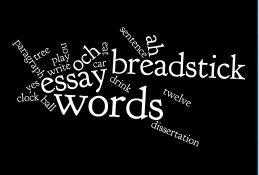
The other day, for example, a young woman came along with an essay that had been failed by her tutor - unsurprisingly, since it seemed to have been written in accordance with an alternative set of grammar rules from that commonly in use by the rest of us. 'Let's just take a look at these first three sentences,' I suggested. 'It seems to me that they're really all one sentence.'

The young woman frowned and shook her head. 'No, they couldn't be,' she said firmly. 'Why not?' I asked. 'Well a sentence has to be twelve words long, doesn't it?' she said, as if this was a truth that even a babe in arms was well aware of. 'Um, no,' I said.

She gave me the sort of look you normally reserve for someone who tells you that the second hand car you are considering buying was owned by one old lady who only ever used it to drive to evensong.

Well that was what she had read on the internet, the young woman insisted, and she had struggled for hours to get every sentence the same. 'It was really hard,' she added. 'And now you're telling me I've got to do it all over again!'

At least my grandson doesn't get his rules from the internet. Instead, he makes them up himself, along with some of his vocabulary. Bread-sticks, for example, are soozies. Goodness knows why. Yes used to be Ah. Now it's Och, as though he had spent some time in Scotland.

Recently his mother told me about a new expression which seems to mean, Who's that? 'I don't know where he got it from,' she protested, 'but whenever there's a knock on the door he looks up, frowns and says something that sounds exactly like arsehole.'

And indeed just last week my grandson was having his midday nap in the spare bedroom upstairs and I was sitting on the edge of the bed reading when he woke and sat up. At the same time the tree-surgeon who was working in our garden came in by the back door and walked through the hallway downstairs.

My grandson's eyes widened and he looked at me. 'Arsehole,' he said.

Funnily enough that may be exactly what the poor young woman who had to rewrite her essay was thinking.

Wednesday, 4 November 2009

Good Writing

I am half way through the First Draft of my next novel. I know this because the story already exists very clearly in my head. I’m not a writer who explores the story on paper, at least not these days. I explore the story in my head for ages before I set to work. Then I write an outline, merely to remind myself of everything I want to include, since it’s quite easy to forget great chunks.

Working in this way leaves me with the opportunity to work on the writing itself, rather than trying to devise a story and write it in the best possible way at the same time, which strikes me as a bit like cycling down the road carrying a parcel.

When I say that I want to work on the writing I mean that I want to get it as good as I can by my own standards. Everybody has different ideas about this but for me good writing should be almost invisible, like the glass in a shop window, so that the reader only sees the goods on display. I’m not interested in writing that calls attention to itself all the time like some leather clad rock star standing in the spotlight producing endless guitar solos.

As a children’s writer I naturally visit schools now and again. In more than one primary school I’ve had the experience of the teacher saying something like, ‘Now then everyone, I’m sure that Mr Keaney is going to show us how to write using lots of lovely describing words.’ That sort of attitude makes me want to scream, ‘No Mr Keaney is going to do no such thing!’ This is no way to teach our children but of course it comes from the rigidity of the National Curriculum.

Recently, a secondary school asked me to visit and I expressed a certain reluctance because on a previous visit some of the pupils had seemed to have no idea who I was or what I was doing there. I only want to come if you do some preparation for the visit, I said. The teacher sent me back a reply stating that this wasn’t really possible because the curriculum determined what was taught in English lessons and there was no time to deviate from that. What was the point in me coming then, I wondered. Because the school was having a Book Week, she said. So my visit was effectively no more than a box-ticking exercise.

You can’t measure good writing by the number of adjectives used. Nor can you pretend that you are introducing children to literature by having an annual Book Week. These are both simply examples of tokenism. I believe this sort of thing has come about because of political interference in schools. In the UK politicians seem obsessed with micro-managing the curriculum so that it produces a series of statistics. And what is the purpose of these statistics? Purportedly, it is to provide parents with choice. But really it’s just so they can use the figures as part of their own miserable campaign of self-preservation.